Published : 2025-11-10
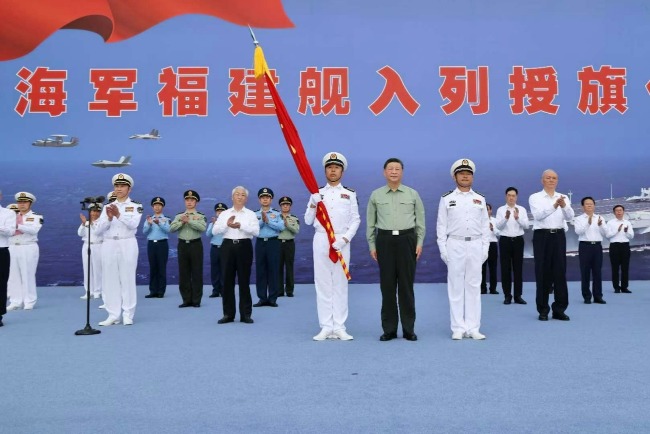
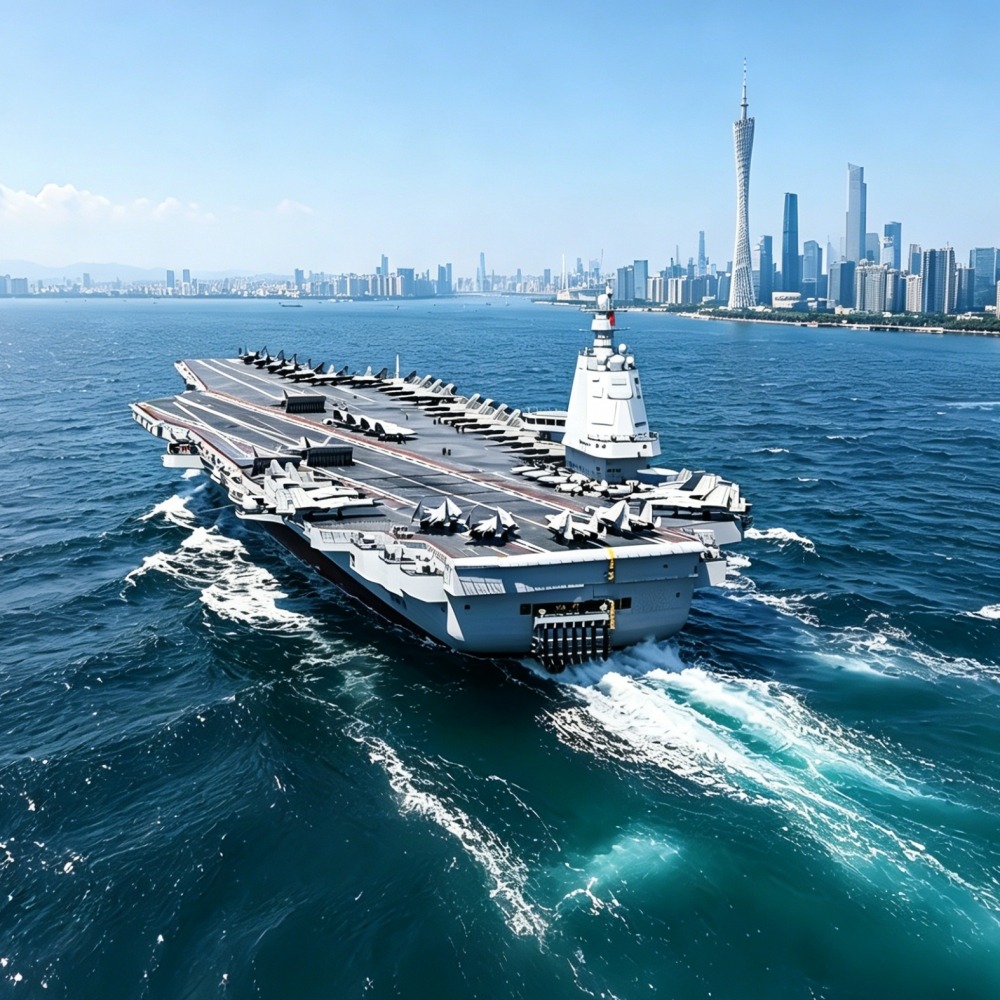
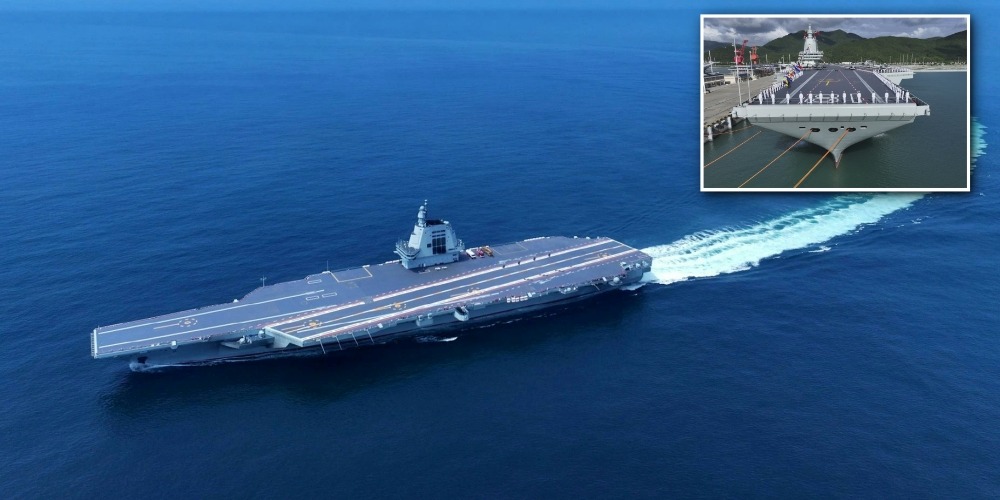
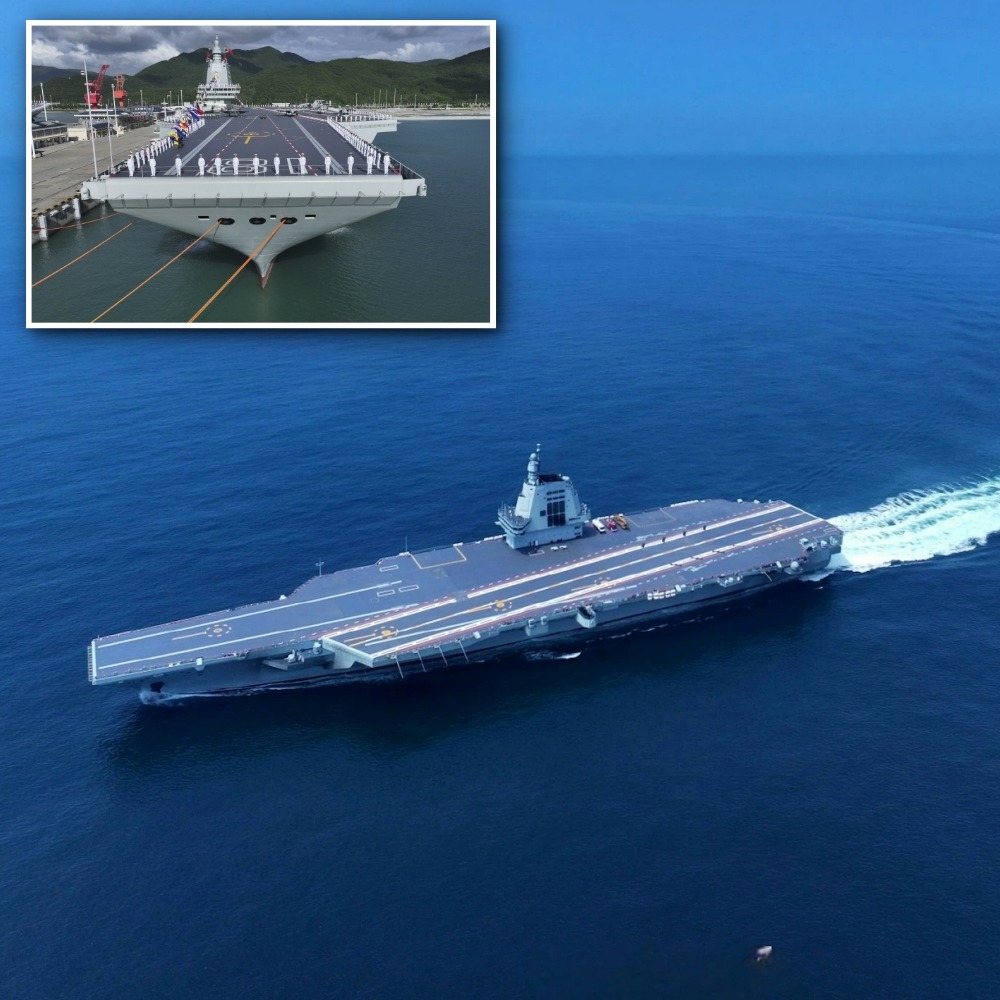
China's first electromagnetic catapult aircraft carrier, the "Fujian", officially entered service in November 2025, marking the People's Liberation Army (PLA)'s entry into the "three-carrier era".
At this point, many military enthusiasts might wonder why this advanced warship is named "Fujian" and what hidden significance lies behind the name.
Former editor-in-chief of Global Times: The Fujian is a warning to "Taiwan independence" advocates
The PLA's warships are mostly named after places. The Regulations on the Naming of Naval Vessels (《海軍艦艇命名條例》) stipulate that "capital ships", including aircraft carriers and amphibious assault ships, are named after Chinese provinces, autonomous regions or centrally administered municipalities. This is the case for the "Liaoning" (遼寧艦) and "Shandong" (山東艦), which preceded the "Fujian" (福建艦).
In fact, back when this colossal ship was still under construction and known as the "Type 003 aircraft carrier", military enthusiasts were already guessing her name. The theory of naming her the "Jiangsu" (江蘇艦), following a geographical "north-to-south" sequence, was once extremely popular.
However, everyone now knows that the little-mentioned "Fujian" turned out to be the winner.
Read more: Will an aircraft carrier be named after Hong Kong? China's naval vessels have naming rules

Why did "Fujian" stand out? The predominant view among military enthusiasts is that since Fujian Province faces Taiwan across the strait, the authorities used its name to deter "Taiwan independence" advocates.
Some military enthusiasts believe that there were previously strong calls to name the Type 003 aircraft carrier "Taiwan" (台灣艦), but that name was "too provocative", and naming it "Fujian" was sufficient to show their stance.
Among those who support this view is Hu Xijin (胡錫進), the former editor-in-chief of the Global Times, an English-language Chinese newspaper under the People's Daily.
On the day the Fujian was launched, he posted on social media, stating bluntly, "I agree with such speculation: the third aircraft carrier should have been named Jiangsu, but skipping over Jiangsu and Zhejiang to be directly named 'Fujian' is to 'strike the mountain to awe the tiger', a warning to Taiwan independence advocates".
Military enthusiasts' analysis: Fujian has deep-rooted ties with Chinese Navy
Besides this, some military enthusiasts believe that Fujian's deep-rooted ties with the navy are also one of the reasons.
From the Qing dynasty (1644-1911) to the War of Resistance Against Japanese Aggression (1931-1945), the heads of the Chinese Navy were almost all from Fujian, including the highly respected Sa Zhenbing (薩鎮冰).
Before China's first aircraft carrier was named the "Liaoning", there were suggestions to name it the "Sa Zhenbing", although this did not comply with the regulations for naming warships.
And more importantly, China's first modern naval academy, the "Foochow Shipbuilding Institution" (船政學堂), was established in 1866 (the 5th year of the Tongzhi reign of the Qing dynasty) at Mawei Port in Fuzhou, Fujian. The area was also home to the Mawei Shipyard, which was China's most important shipyard at the time and had built warships, so it is very fitting to name a groundbreaking electromagnetic catapult aircraft carrier after the province.
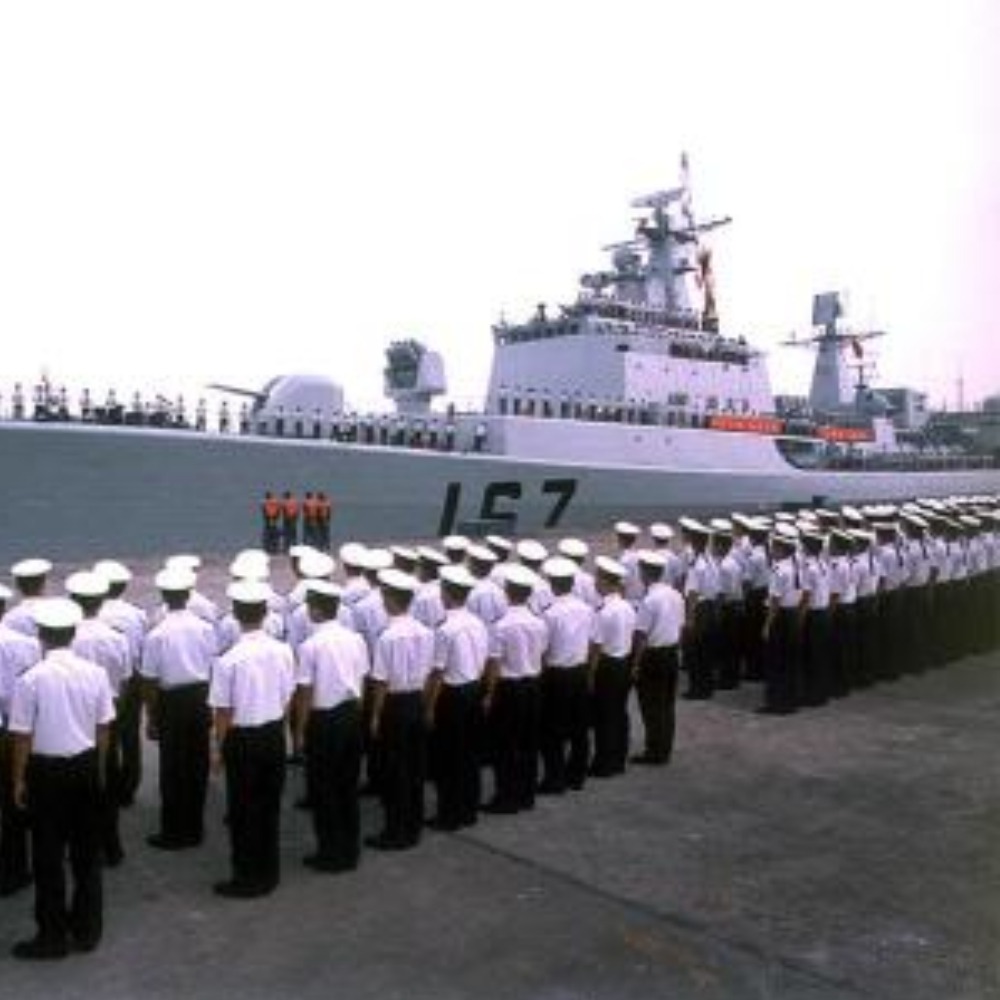
Military enthusiasts have also done a tally, stating that many warships are already named after places in Jiangsu province. For example, among the Type 052D destroyers there are the "Nanjing" (南京艦) and the "Suzhou" (蘇州艦), while "Wuxi" (無錫艦) is used for the most advanced Type 055 10-thousand-tonne large destroyer, not to mention other ship types.
In comparison, Fujian, which is also a coastal province, has indeed had fewer new-generation warships named after it. Naming the aircraft carrier "Fujian" this time seems more reasonable and logical than using "Jiangsu".
Read more: Fujian is launched. Will the Type 004 be a nuclear-powered aircraft carrier?
The Fujian's launch on the 17th might be a demonstration that history is not forgotten
In fact, China still has as many as 30 provincial-level administrative divisions available for naming aircraft carriers, and this does not include the Hong Kong and Macao Special Administrative Regions, which are of the same level.
Therefore, naming the "third child" "Fujian" must have a meaning, just as the first Type 055 destroyer was named "Nanchang" (南昌艦). It's just that the authorities have not provided an explanation this time, leaving military enthusiasts to find their own answers.
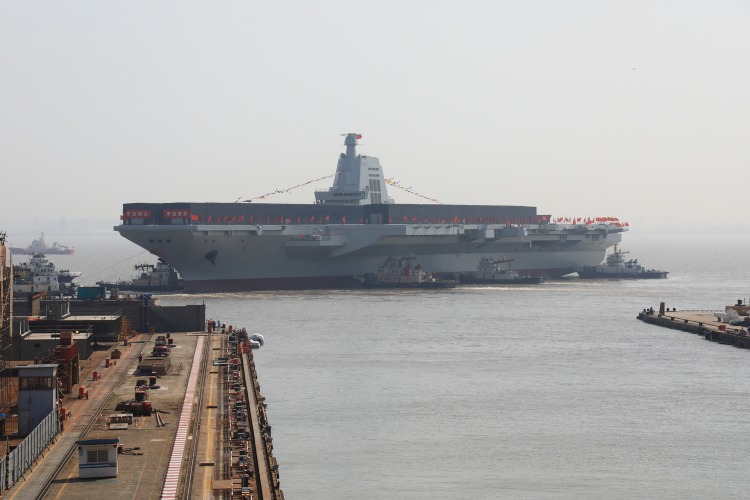
In addition, besides its name which has sparked everyone's interest, the launch of the electromagnetic catapult aircraft carrier Fujian on 17 June 2022 has also been subject to numerous interpretations.
For instance, some military enthusiasts mentioned that China's Beiyang Fleet (北洋水師) was defeated on 17 September 1894, so the choice to launch the Fujian on the 17th signifies not forgetting history and strengthening oneself by sea.
Some media outlets have also pointed out that on 17th June 1957, China successfully detonated its first hydrogen bomb, suggesting that the launch of the Fujian on the same date holds special significance. Of course, whether these interpretations are right or wrong is difficult to determine at present.
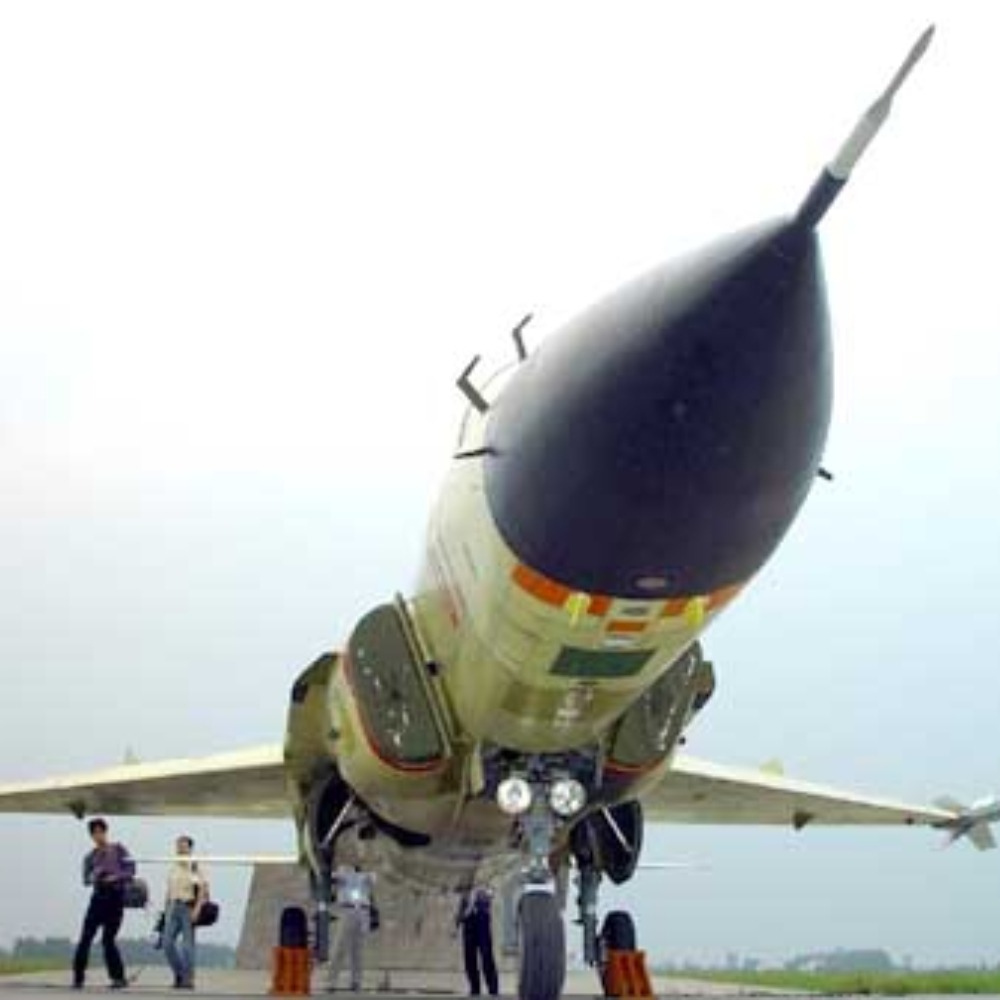
Records show that after its launch and outfitting, the Fujian underwent a total of nine sea trials, during which the catapult take-off and recovery of three new types of carrier-based fighter jets and early warning aircraft, the J-35, J-15T, and KJ-600, were also tested.
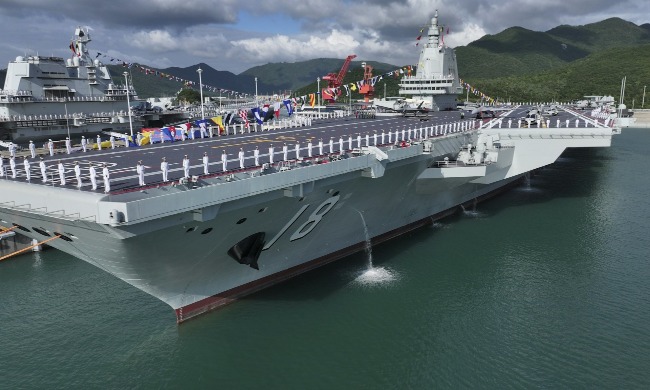
On 5th November 2025, the ship was officially commissioned at the naval port in Sanya, Hainan Province.
The commissioning of the Fujian marks China's official entry into the "three-carrier era", and it has also set multiple global firsts, including being the world's first aircraft carrier with an integrated electric propulsion system, the first conventionally powered aircraft carrier with electromagnetic catapults, and the first to launch 5th-generation fighter jets using electromagnetic catapults.